
Introduction
I can still remember the first audiobook I ever listened to. It was fiction – an adventure, thriller novel from an international best-seller. The narrator irritated me and I found my concentration waned, continually forcing me to re-listen to passages where I’d tuned out. I made it about halfway before calling it quits and returning to the familiar warmth of a paperback.
But ten years later, things changed. Podcasts became a thing (again) and I became better at listening while multitasking. I gave audiobooks another chance and found I enjoyed them – usually for non-fiction but not always. Audiobooks have become a legitimate part of my reading.
I’d never thought about creating one until late last year. My second novel, Once Upon a Camino, had been out for a year and done much better than I’d hoped. I’d started receiving occasional messages from readers, enquiring whether there’d ever be an audiobook version. Truthfully, I’d never thought there would be. But with every enquiry, my curiosity grew. How hard could creating an audiobook be?
It turns out it’s not easy – or particularly cheap – but it’s also very rewarding.
For any authors considering it, here’s the path I followed.
Will anyone actually listen?
As the fancy chart below shows, audiobooks are the fastest-growing format in the publishing industry and will be the driving force behind the growth of book publishing over the next decade.

Despite this trend, I still had no idea whether anyone would actually listen if I created one. Given the amount of work that goes into to creating an audiobook, I wanted a basic understanding of my target market.
An insightful article from WordsRated broke down the demographics and listening habits of audiobook listeners from the United States. The data points I found the most interesting were:
- Over 65% of all audiobook sales in the US are fiction
- Around 70% of American adults engaged in multitasking while listening to audiobooks
- 34% of US audiobook listeners were over the age of 50
Based on some of the data from my own Facebook ads, I knew I had strong readership with women over the age of 45. I also knew many people who are preparing to walk the Camino spend several months preparing for the month-long hike. I hoped some of them would be searching for something to listen to as they pounding up and down the hills of their hometown.
The data suggested there was a market for my story as an audiobook.
Now I just had to figure out how to create one.
Choose your champion!
Having decided to create an audiobook, you’ll need to consider how you’ll distribute it. There are half a dozen players in this space but the two that I researched were ACX (owned by Amazon) and Findaway Voices (owned by Spotify).
ACX (or Audiobook Creation Exchange) is the biggest distribution platform and allows authors to connect with narrators and then guide them through the production process.
Findaway Voices provides similar features to ACX, although it’s now removed the guided production process.
Given ACX didn’t cater for Australian authors (as of May 2024, ACX still only caters for residents of the US, UK, Canada and Ireland), my decision was simple. However, here’s the cheat sheet I compiled when comparing the two providers.
| Feature | ACX | Findaway Voices |
| A marketplace to find authors | Yes | No |
| Guided step-by-step production process | Yes | No – left to the author and narrator to work offline |
| Countries supported | US, UK, Canada, Ireland | All |
| Price control | No – controlled by Audible | Yes |
| Royalty structure | If exclusive to ACX, it’s 40%, meaning your audiobooks can only be distributed to Audible, Amazon, and iTunes. If not exclusive, authors only receive 25% | 80% of the 25% royalties from Audible, Amazon, and iTunes at a non-exclusive rate and 80% of the 40-50% royalties from other retailers |
| No. of marketplaces | Audible, Amazon, and iTunes | 38 different marketplaces, including Audible, Apple, Spotify, GooglePlay, Kobo, StoryTel |
Finding your voice
It takes hours for someone to listen to your audiobook – mine ended up being 13 hours – so it’s critical finding the right narrator. When I asked for advice from some other writers, I broadly received three suggestions:
Do it yourself
This is a seemingly affordable option – with no fees to other artists. Instead, there’s the cost of time to methodically record your book. In addition, you’ll likely spend more time (and money) attaining the skills and equipment to edit the recordings to ensure the sound quality passes the stringent quality checks of marketplaces like Audible. There are lots of online videos available to help guide you through the process and I know many authors who’ve gone down this route.
I love when the author narrates their own book – especially if it’s a memoir – where their own voice adds to the book’s authenticity. But my novel presented a unqiue challenge in that there are several different accents throughout it – English, American, Scottish and of course Spanish. There’s also many sentences written in Spanish, which were far easier to write than for me to pronounce.
Finally, this option demands you can tolerate listening to yourself. I wince every time I hear myself record a voicemail greeting – so the prospect of spending dozens of hours with my voice was untenable.
Artificial Intelligence (AI)
Another author suggested using AI. I considered this briefly and looking at website like https://elevenlabs.io/ I was impressed with how life-like the technology has become.
There were a range of voices to choose from of varying ages, genders and accents.
But as good as this new technology has grown, it lacked soul. There was no nuance or heart in the performance.
And although I’m grateful for technology making our day-to-day lives easier, I’m still not ready to bend the knee to AI so quickly. I understand that not everyone would have the budget to hire a voice artist or the skills to do it themselves, but for me personally, handing this job to a computer rather than a talented human wasn’t something I wanted to do.
Hire a voice artist
There are so many talented voice artists available to record your audiobook. The trick is finding them. At the time I was searching for mine, FindawayVoices offered a marketplace where I could search for available artists, including a range of vocal attributes such as gender and supported accents. They seem to have now removed this feature but ACX and other sites like Voices.com and Fiverr.com offer the same.

This made me consider what type of voice belonged to my story? After some thought, I decided it should be an English male, given my protagonist – Tom – is from London. But much of the book is told from the perspective of Spanish characters, so I ideally needed a narrator who could also speak Spanish.
I prepared a short script and submitted a call for submissions on FindawayVoice’s marketplace. Within days I had a list of audition clips to listen to. It was a surreal moment: hearing my writing spoken in radio-worthy voices from people I’d never met. All were very good; but one was perfect.
Jorge Pena Gonzalez is a British-Hispanic voice over artist based in London, with years of voice work experience. The moment I heard his submission I knew he was right for my book. His English accent was ideal for Tom and he showcased his immense range by reading parts in Spanish as Fernando and delivering a great Scottish accent for Sir Walter.
I’d found my narrator.
The Seven P’s
When I was in the Army Reserve, the grizzly Warrant Officer overseeing my basic training introduced my platoon and I to the Seven P’s: Prior Preparation and Planning Prevents Piss-Poor Performance.
For those using a voice-over artist, it’s important to clearly agree the terms of the project, including cost, schedule and ownership rights. This protects both parties.
In regard to cost, the rates are given Per Finished Hour (PFH). This includes the narration, proof-listening, sound-mixing and any required edits. All of this is essential in ensuring you have a quality production that will pass Audible’s strict quality checks and be enjoyed by listeners.
While rates will always vary, dependent on experience of the artist, I found that most artists charged anywhere between 200 to 300 US Dollars (USD) Per Finished Hour. As a very simple example:
Finished Audiobook Duration: 5:00:00 (5 hours, zero minutes, zero seconds)
Narrator Rate: $200 PFH
Amount Due: $1,000
Reason: 5 hours × $200 PFH = $1,000
FindawayVoices provided a sample production agreement which clearly documented the ownership of rights as well as outlining the obligations of each party if the project was cancelled or couldn’t be completed. As someone going through this process for the first time, this agreement gave me comfort that all our arrangements were clear and transparent.
With the paperwork done, I sent Jorge some pre-production notes about the book in the form of a 6-page document which had 4-5 dot-points on each chapter. This explained some of my thoughts about each character’s voice and accent, while also offering some suggestions about the pacing or delivery of specific scenes or lines of dialogue. Jorge and I then had an hour-long conversation on Zoom. He had a list of questions about the plot and character and location pronunciations. Being a novice, I had loads of questions questions too. Some of them were around sound design. I asked whether we should consider adding sound effects for the gunshots or chimes to mark the section breaks within chapters. Jorge immediately said we shouldn’t – explaining it would be a distraction to the listener. How grateful I am now to have had his experience to save me from some of these half-thoughts.
With us both aligned, I stepped away and trusted Jorge to narrate my book the way I hoped he would.
Audiobook covers: No cutting corners
While the recordings were starting, I turned my attention to the cover art.
Audiobook covers are different dimensions to paperback and eBooks. I’m not sure why this is – in the same way I’m not sure why the world can’t agree on a universal electricity plug – but they differ.
My first inclination was to simply crop my existing cover down to the 2400 pixel square audiobook cover. But it looked dreadful.
My second – and best – plan was to email Holly Dunn, the artist who created the book’s original artwork. Based in New Zealand, Holly is a book-design savant with a brilliant portfolio of eye-catching covers she’s created for authors from around the world.
She accommodated me at short notice and, for a very reasonable price, transformed my beloved cover into the correct audiobook dimension, giving it a professional aura to those browsing online.

This Magic Moment
Jorge had originally planned to have my audiobook back to me within six weeks, but he emailed to say he’d caught the flu and needed to pause the production. This made sense given his voice would be noticeably different in the chapters where he was battling the flu. I appreciated how proactively he’d managed my expectations. He sent me the audio files two weeks later than originally planned and I rushed home to listen.
Being an independent author can be tough; there are long days of a flashing cursor mocking you into thinking nobody will ever read what you’re writing.
But there are magic moments too: the first time you hold a copy of your paperback in your hands; an email from a bookshop saying they’ve sold out of your books and need more copies; getting a positive review on GoodReads. But I haven’t experienced anything quite like sitting down and listening to the book I’d spent years writing, beautifully narrated by someone else.
Hearing Jorge’s own interpretation of the characters gave me goosebumps throughout the entire book. He brought the characters to life; Ramos sounded terrifying and Pablo made me laugh out loud. It exceeded all expectation.
The final production was thirteen hours in total and as I listened, I noted down about a dozen lines which needed editing (which is incredible achievement given the length of the book). These included things like the wrong voice being applied to a line of dialogue or a slight mispronunciation. All of it was minor and within a few days, Jorge had made the corrections and sent me the final versions.
I was almost there.
Fly, my pretties… Fly!
The moment of truth had arrived, and I entered all of the metadata about my book – the ISBN, pricing, blurb and title details – into FindawayVoices and clicked “Publish”. I waited.
And waited.
And waited.
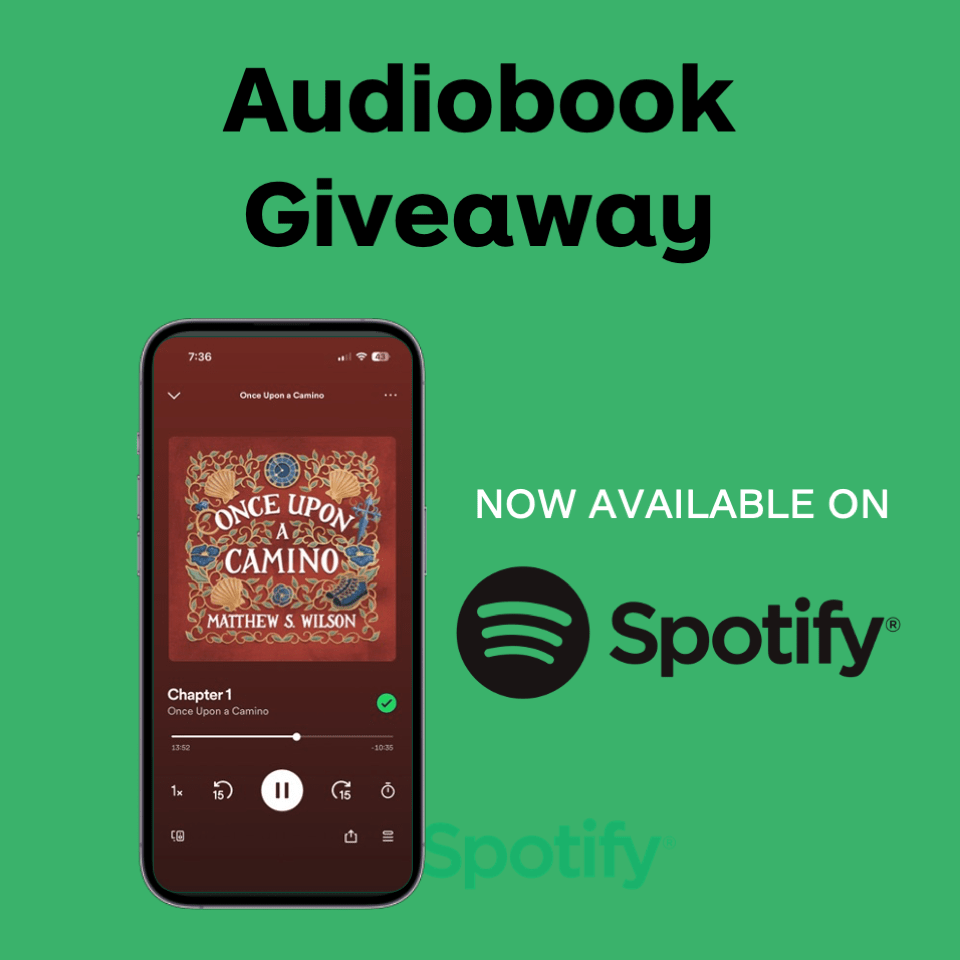
The distribution process out to the 30+ retailers wasn’t as quick as I’d hoped. While the book was available for download on Spotify and AppleBooks in a few days, it took nine tortuous weeks for it to pass through Audible’s quality checks and appear on Amazon. There weren’t any notifications when it was finally approved. I simply went onto Amazon one day and my book was there.
With my baby now available for purchase, I kicked off some marketing to let people know this was out there. This included some posts on some online forums and Facebook Groups devoted to the Camino de Santiago. I also created some Facebook ads for the audiobook using some of the excellent tips and guides from this YouTube tutorial from David Gaughran.
One challenge I found was it was difficult to proactively track sales progress via FindawayVoices. Unlike tracking book sales on KDP – which is near-instantaneous – there’s a two-month delay with seeing Audible sales, meaning it can be difficult to gauge if your book is finding its intended market.
I needed to wait a little longer to discover whether this had all been a waste of time and money.
The Verdict
The audiobook of Once Upon a Camino hit the virtual shelves of Audible and Amazon in February 2024, meaning at the time of writing, I have four proper months of data.
Thankfully, all my initial research about a potential target audience seems to have been correct and in those first three months, the audiobook has equated to 34% of total sales.
In addition, I’ve been so grateful for the lovely reactions from listeners and some of the messages and reviews I’ve received. Among my favourites was a pilgrim on their way to Santiago who listened along as they walked, and a couple who listened to the story together as they drove around Australia. Almost all the reviews have commented on what an incredible job Jorge did with the narration. So the effort in finding the right person certainly paid off.
Conclusion
I hope this article has helped you. If you have any of your own observations about creating an audiobook, or spotted any inaccuracies in any of the advice above, please let me know in the comments below.
For anyone contemplating creating your own audiobook, good luck!

 Matthew S. Wilson